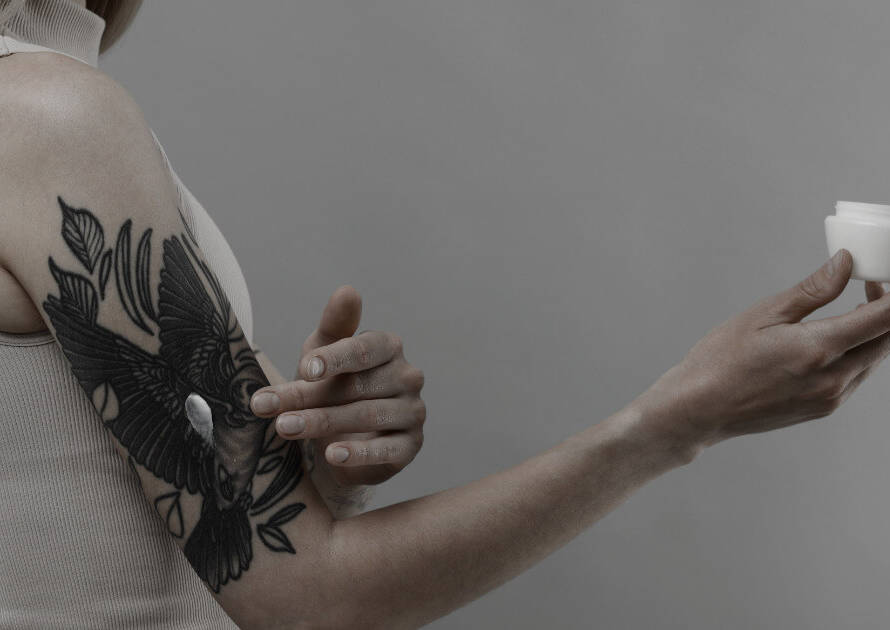
First, let’s set the standard. Always follow your artist’s instructions. Not only because every tattoo heals differently, but because the wrapping method, the placement, the ink saturation, your skin, and your aftercare routine all influence how much scabbing you see. This guide is here to help you understand what is usually normal, what is not, and how to care for a healing tattoo without making the recovery harder than it needs to be.
A lot of people panic when a new tattoo starts to scab. A lot of people also panic when it does nie scab very much. Both reactions are understandable. The internet has trained people to expect one rigid healing pattern, but real tattoo healing is more variable than that. Light scabbing can be normal. Heavy, cracked, painful scabbing is not ideal. And in some cases, especially with calm healing and occlusive dressings, very little scabbing can also be normal.
If you are still in the planning stage, start with Co zrobić przed zrobieniem tatuażu: protokół przygotowawczy. Good tattoo aftercare starts before the appointment, not after it. Your skin, your sleep, your hydration, and your setup for the first few days all affect how the tattoo heals.
Why New Tattoos Scab
A new tattoo is a controlled skin injury. The needles repeatedly puncture the skin, and your body responds by starting a repair process. In the early stages, you may see redness, mild swelling, soreness, clear fluid, flaking, and sometimes scabbing. That is your skin trying to protect itself while rebuilding the surface barrier over the tattooed area.
Scabs form when wound fluid, blood components, and damaged surface material dry over the healing area. In tattoo healing, that scabbing is often lighter than people expect. It can look more like dry flakes, fine crusting, or peeling skin than the thick scabs people associate with cuts and scrapes. That is why many people are not sure whether what they are seeing is “real scabbing” or simply peeling.
What Normal Tattoo Scabbing Actually Looks Like
Normal tattoo scabbing is usually thin, dry, and improving. The area may feel slightly tight. You may notice small coloured flakes or light crusting over linework, shading, or heavily saturated areas. It may not look pretty, but it should move in the direction of calmer, drier, less irritated skin as the days pass.
What normal tattoo scabbing should nie look like is a hard, armour-like shell that cracks when you move, bleeds repeatedly, becomes wetter over time, smells unpleasant, or stays increasingly angry instead of settling down. If the healing trend is getting worse instead of better, stop asking whether it is “normal tattoo scabbing” and start thinking about irritation, overworked skin, allergy, or infection.
When Does Tattoo Scabbing Start and How Long Does It Last
There is no single clock that fits everyone, but mild scabbing or crusting often appears within the first several days and then transitions into peeling and flaking over the next one to two weeks. In NHS aftercare guidance, the broader healing window is described as roughly 14 to 21 days for the surface stages, while Cleveland Clinic notes that flaking and scabs commonly show up during the first two weeks, even though deeper healing continues for longer.
This also explains why tattoos can look strange after the scabs come away. The skin can appear pale, cloudy, dull, or “not fully inked” before it settles. That does not automatically mean your tattoo is ruined. In NHS aftercare information, the area can look lighter after the scabs have healed and fallen off before the final colour settles several weeks later. If you want the skin-level explanation for why tattoos behave like this, read What is a Tattoo?.
Why Some New Tattoos Barely Scab at All
This is one of the biggest things most articles still explain badly. A tattoo does nie need to produce dramatic scabs to be healing correctly. According to EADV guidance, some professional dressing methods allow the wound to heal without forming a scab. In other words, the absence of heavy scabbing is not automatically a problem.
You may see less scabbing if the tattoo healed calmly, if it was protected well early on, if the skin trauma was lower, or if the tattoo was not extremely saturated. On the other hand, larger colour pieces, heavier black fill, friction-prone placements, and irritated skin can often look rougher during recovery. What matters more than the amount of scabbing is whether the tattoo is steadily calming down.
Tattoo Scabbing vs Peeling vs Infection
Peeling is not the same as scabbing, even though people often use the terms as if they mean the same thing. Peeling is usually more superficial. It looks like thin, dry, translucent skin lifting away, similar to a light sunburn peel. Scabbing is deeper and involves dried wound material over a healing area. Both can happen in the same recovery window.
Infection is a different category entirely. A healing tattoo can be red, sore, itchy, flaky, and a little messy early on. But if you develop worsening pain, spreading redness, hot skin, foul odour, pus, fever, chills, or red streaks moving away from the tattoo, that is not “just healing.” That is when you should contact a medical professional promptly.
Bezpłatnie na iOS i AndroidaAplikacja Tattoo Healer
Pozbądź się domysłów z procesu gojenia! Pierwsze dni gojenia są najważniejsze. Aby pomóc Ci przejść przez ten okres z pełnym zaufaniem, stworzyliśmy aplikację Tattoo Healer – Twój cyfrowy przewodnik po pielęgnacji.
How to Care for a Scabbing Tattoo
The best tattoo aftercare for scabbing is boring on purpose. Wash gently with clean hands, lukewarm water, and a mild fragrance-free cleanser or soap that fits your artist’s instructions. Pat it dry. Do not scrub it. Do not rub it with a towel. Do not try to “exfoliate” the flakes away.
Then apply a thin layer of the aftercare product your artist recommended, or a simple fragrance-free moisturiser once your routine has moved into that stage. Thin matters. The goal is to support the skin barrier, not smother the tattoo. Clothing should stay loose, rubbing should stay minimal, and soaking in baths, pools, hot tubs, or open water should stay off the table until healing is complete.
Mistakes That Make Tattoo Scabbing Worse
The biggest mistake is interference. Picking, scratching, peeling, or pulling at scabs can remove healing tissue, increase infection risk, and lead to ink loss or scarring. This is the fastest way people turn normal healing into a worse result.
The second mistake is bad moisture control. Skin that becomes too dry can crack. Skin that is constantly overloaded with thick product can also heal badly. The right environment is clean, lightly supported, and left alone. Not soaked. Not sealed in heavy layers unless your artist specifically instructed it. Not “helped” every hour.
The third mistake is relaxing too early. Even when the tattoo looks calmer on the surface, it is still stabilising underneath. That is why direct sun, tight friction, intense rubbing, and soaking are such common ways people lose quality during healing. When the tattoo is fully healed, move into long-term care habits like consistent moisturising and UV protection. For that stage,
What Most People Get Wrong
Most people assume the goal is to have no scabbing at all, or that more scabbing means the tattoo is automatically healing badly. Neither idea is reliable on its own. The better question is whether the tattoo is following a healthy trend: less redness, less soreness, less fluid, calmer texture, and steady progress without alarming symptoms.
The other big misconception is that all peeling or dullness means ink loss. During healing, the surface can look flaky, cloudy, and less vibrant before it settles. That phase is unsettling, but it is common. True concern starts when the wound behaviour itself is becoming more inflamed, wetter, more painful, hotter, or more aggressive over time.
Quick Tattoo Scabbing Checklist
If you want the short version, this is what matters most. Wash it gently. Pat it dry. Moisturise lightly. Do not pick. Do not scratch. Do not soak it. Keep friction low. Keep sun off it while it heals. Watch the trend, not a single moment in isolation. And if the tattoo starts looking hotter, wetter, smellier, more painful, or more inflamed with time, get medical advice.
Final perspective
New tattoo scabbing is not automatically bad, and no-scabbing is not automatically bad either. The better framework is simple: healing tattoos can flake, peel, itch, and sometimes scab. Healthy healing usually improves gradually. Unhealthy healing usually becomes more inflamed, more painful, or more wet over time. Respect the process, keep the aftercare routine simple, and let the skin do what it is designed to do.
Często zadawane pytania
Is it normal for a new tattoo to scab?
Yes. Light scabbing or crusting can be a normal part of healing for many tattoos, especially during the early surface-repair stage. What matters is that the tattoo is improving, not worsening.
When does tattoo scabbing usually start?
Often within the first several days, although timing varies by person, placement, and healing style. Flaking and scabs commonly show up during the first two weeks of healing.
How long does tattoo scabbing last?
Usually days rather than forever. Surface healing often moves through scabbing and peeling within roughly two to three weeks, although the deeper layers can continue settling after that.
Is it normal if my tattoo is not scabbing?
It can be. Some tattoos heal with little visible scabbing, and EADV guidance notes that some dressing methods can support healing without a scab forming. No scabbing matters far less than whether the tattoo is healing calmly.
What is the difference between tattoo scabbing and tattoo peeling?
Scabbing is more like dried wound material over a healing area. Peeling is more superficial shedding of dead surface skin, often like a mild sunburn peel. Both can happen during normal healing.
When should I worry about tattoo scabbing?
You should worry when symptoms are escalating instead of settling: spreading redness, hot skin, foul odour, pus, fever, severe pain, or red streaks moving away from the tattoo. Those signs deserve medical attention.
Bezpłatnie na iOS i AndroidaAplikacja Tattoo Healer
Pozbądź się domysłów z procesu gojenia! Pierwsze dni gojenia są najważniejsze. Aby pomóc Ci przejść przez ten okres z pełnym zaufaniem, stworzyliśmy aplikację Tattoo Healer – Twój cyfrowy przewodnik po pielęgnacji.