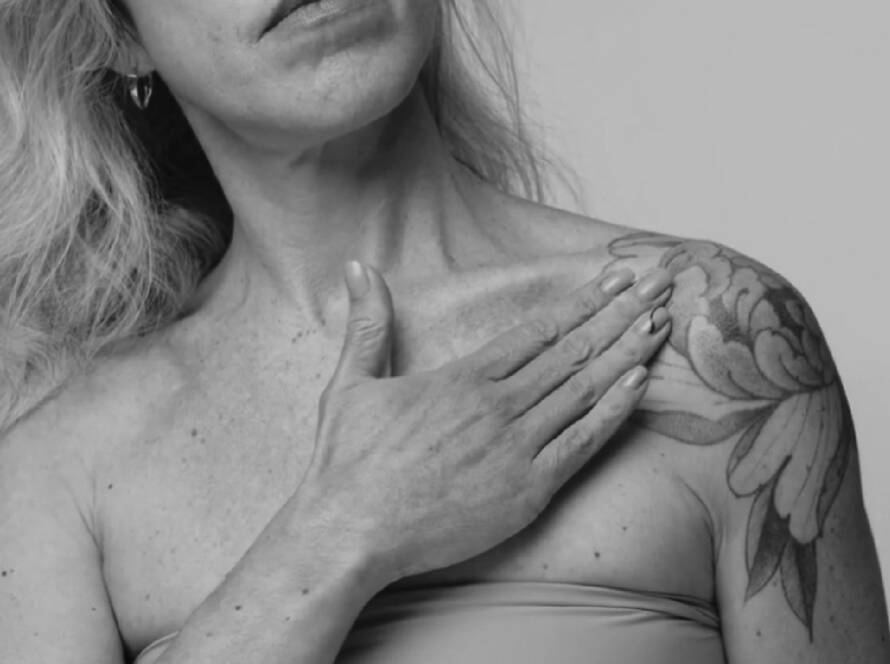
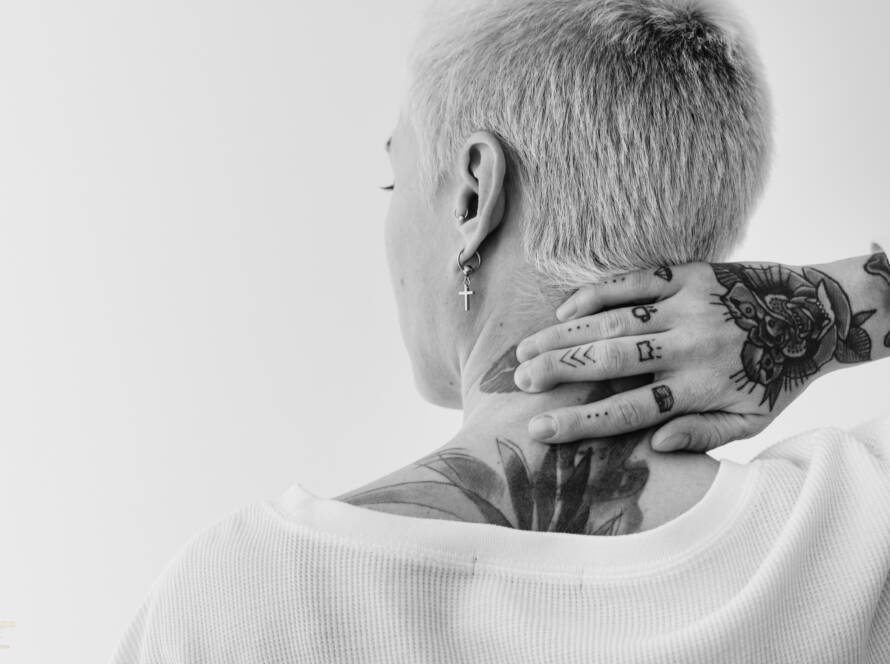
A tattoo is a permanent form of body modification created by injecting indelible ink, dyes, and pigments into the dermis, the second layer of skin, to alter its pigment. Unlike temporary markings on the epidermis (surface layer), tattoos are long–lasting because the ink particles are too large for the body’s white blood cells to remove, making the design a permanent part of the skin’s structure.
The Origin of the Word "Tattoo"
While the practice of skin marking is ancient, the word “tattoo” only entered the English lexicon in the late 18th century. Before this, Europeans referred to the practice as “pricking,” “staining,” or “painting.”
The Polynesian Connection
The modern word is a loanword from the Polynesian family of languages.
- Tahitian: Tatau * Samoan: Tatatau
The root of the word comes from the Polynesian “ta,” meaning “to strike” or “to tap.” This is an onomatopoeic reference to the rhythmic sound made by traditional tattooing tools, a bone-toothed comb being struck by a wooden mallet to drive ink into the skin.
The 1769 Turning Point: Captain James Cook
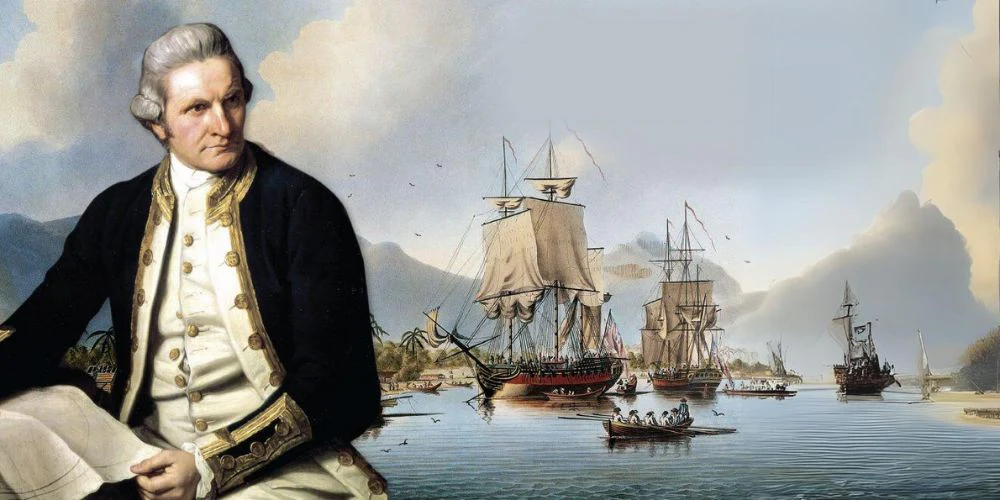
The word “tattoo” was introduced to the Western world by the British explorer Captain James Cook and his naturalist, Joseph Banks, following their 1769 voyage to Tahiti on the HMS Endeavour.
In his journal entry from July 1769, Cook wrote:
“Both sexes paint their bodys, Tattow, as it is called in their language. This is done by inlaying the colour of Black under their skins, in such a manner as to be indelible.”
Linguistic Evolution: From "Tattaow" to "Tattoo"
For several decades, the spelling varied wildly in English literature, appearing as tattaow, tattow, and tattowing.
- Scientific Recognition: The word was officially “standardized” in the late 1700s as it began appearing in medical and naval records.
- Common Misconception: The word is often confused with the Dutch “taptoe” (meaning “to close the tap”), which refers to a military drum signal or “Military Tattoo.” Linguistically, these two words have separate origins despite their identical spelling today.
When Were Tattoos Invented? A 5,000-Year Timeline
There is no single “inventor” of the tattoo. Instead, archaeological evidence suggests that tattooing was discovered independently by various human civilizations across the globe as early as the Neolithic era.
The Neolithic Era (c. 3300 BCE)
For decades, Ötzi the Iceman was cited as the earliest evidence of tattooing. Found in the Italian Alps, his body features 61 tattoos consisting of simple lines and crosses.
- Scientific Insight: Chemical analysis of Ötzi’s tattoos shows they were made from soot or fireplace ash, and their placement over joint-pain sites suggests they were likely used for medicinal or therapeutic purposes (a primitive form of acupuncture) rather than decoration.
The Predynastic Egyptian Era (c. 3100 BCE)
Recent infrared imaging has pushed the history of “artistic” tattooing even further back. The Gebelein Mummies (held in the British Museum) show that tattooing existed in Africa concurrently with Ötzi.
- The “Ginger” Mummy: Features tattoos of a wild bull and a Barbary sheep on the upper arm, the earliest known examples of figurative (pictorial) art on human skin.
The Americas and Asia (c. 2000 BCE -1000 BCE)
- Chinchorro Culture (Chile): A mummy from this region displays a “mustache” tattoo on the upper lip, dated to approximately 2000 BCE.
- The Altai Mountains (Siberia): The “Siberian Ice Maiden” (The Princess of Ukok), dated to c. 500 BCE, features incredibly sophisticated tattoos of mythical creatures. Her tattoos are stylistically similar to modern “fine line” work, showing that high-level artistic skill in tattooing is thousands of years old.
The Greco-Roman Shift (c. 500 BCE - 400 CE)
In the West, the perception of tattoos shifted from “status symbols” to “marks of shame.”
- The “Stigma”: The Greeks and Romans used tattoos (called stigmata) primarily to mark enslaved people, criminals, or prisoners of war. It wasn’t until the Roman Crusades that soldiers began tattooing themselves with religious symbols to ensure they would be identified for a Christian burial if they fell in battle.
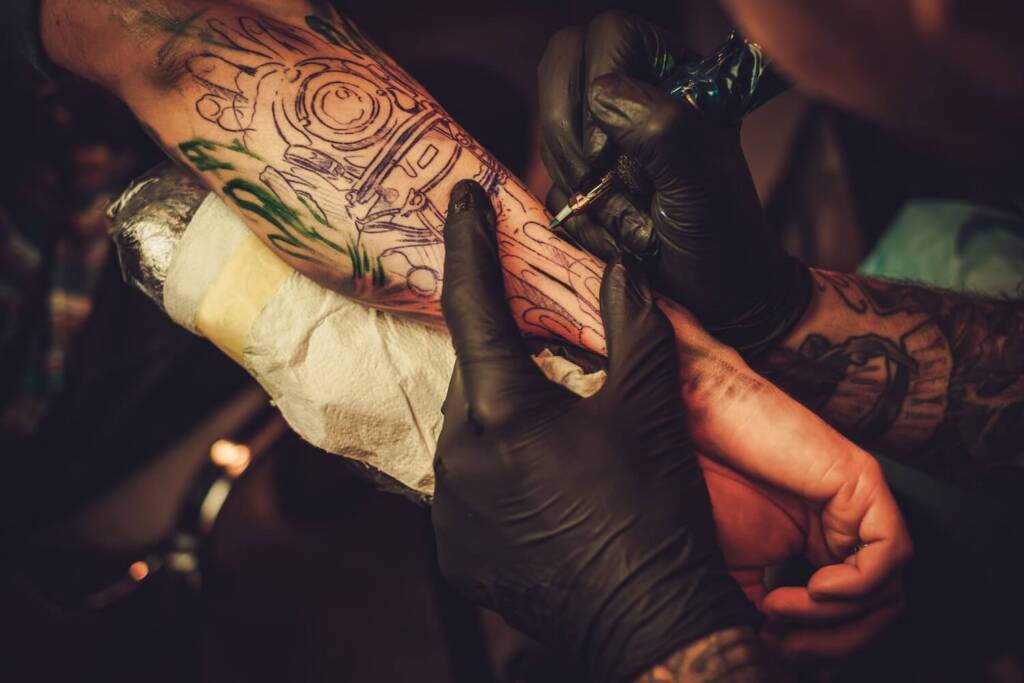
How a Tattoo is Made: The Biological Process
While it looks like the ink is simply “painted” under the skin, a tattoo is actually a sophisticated biological interaction between the tattoo machine and your immune system.
The Mechanical Delivery
A professional tattoo machine uses a motorized system to drive a grouping of needles into the skin at a frequency of 50 to 3,000 times per minute. These needles do not “inject” ink like a syringe; instead, they create vacuum–like capillary action that pulls ink into the tiny punctures.
Penetrating the Dermis
For a tattoo to be permanent, the needle must bypass the epidermis (the outer layer of skin that constantly sheds) and reach the dermis. The dermis is composed of collagen fibers, nerves, and blood vessels. If the ink is placed too shallow, it will wash away as the skin heals; if placed too deep (into the hypodermis), the ink will “blow out,” creating a blurry, bruised look.
The Immune Response (Why it Stays)
The moment the ink enters the dermis, your body treats it as a foreign invader. Your immune system triggers an inflammatory response, sending white blood cells called macrophages to the site to “clear” the ink.
- The Entrapment: The macrophages swallow the ink particles to destroy them, but the pigment particles are too large to be digested.
- The Result: The macrophages become “trapped” in the skin’s matrix, holding the pigment in place. This cellular entrapment is exactly why your tattoo remains visible for a lifetime.
The Healing Cycle
As the skin repairs itself, the damaged epidermis flakes off (like a sunburn), and a new layer of clear skin grows over the ink. The ink is now “sandwiched” safely within the dermis, viewed through the translucent top layer of skin.
Free on iOS & AndroidTattoo Healer App
Take the Guesswork Out of Your Recovery! The first days of healing are the most critical. To help you navigate this period with total confidence, we developed the Tattoo Healer App, your digital aftercare guide.
Common Tattoo Methods
Tattooing techniques have evolved from simple hand–poking to high–speed electromagnetic machines. Today, the method chosen often dictates the texture, speed, and healing process of the art.
Modern Machine Tattooing
Most professional studios use one of two primary types of electric machines. These machines convert electrical current into the mechanical “reciprocating” motion of the needle.
- Coil Machines: These use a pair of electromagnetic coils to create a hammer-like motion. They are the “traditional” electric choice, known for their distinct buzzing sound and high power, making them excellent for bold linework and large areas of color.
- Rotary Machines: These use a small electric motor to move the needles in a smooth, consistent cycle. They are much quieter, lighter, and cause less trauma to the skin, which often leads to faster healing times. Many modern “Pen-style” machines are rotary-based.
Hand-Poked (Stick and Poke)
Before machines existed, all tattoos were “hand poked.” While this is often associated with DIY “home” tattoos, Professional Hand-Poking is a respected art form.
- The Technique: The artist manually pushes a single needle or a needle grouping into the skin, dot-by-dot.
- The Result: Hand poked tattoos often have a softer, organic look. Because there is no mechanical vibration, the skin typically experiences less swelling than with a machine.
Tebori (Traditional Japanese Hand-Tattooing)
Tebori (meaning “to carve by hand”) is a specialized Japanese method that dates back hundreds of years.
- The Tool: A long handle (traditionally bamboo or wood) called a nomi with a set of needles attached to the end.
- The Motion: The artist uses a rhythmic “leveraging” motion to push the ink into the skin. This method is famous for creating deep, saturated colors and smooth gradients that are difficult to replicate with a machine.
Polynesian Tapping (Tatau)
In many Pacific Island cultures, tattooing is a sacred, communal ritual performed with a “mace and comb” toolset.
- The Process: A serrated bone or shell comb is dipped in ink and placed against the skin. A second person, the “stretcher”, holds the skin taut while the artist strikes the comb with a wooden mallet.
- The Sound: This is the source of the word tatau (the “tap-tap” sound). It is one of the most physically demanding methods for both the artist and the recipient.
Mastering the Tattoo Journey
Understanding the true nature of a tattoo requires an appreciation for a 5,000-year-old human tradition that sits at the intersection of biological science, cultural heritage, and personal identity.
From the primitive carbon markings found on Neolithic remains to the sophisticated electromagnetic precision of modern rotary machines, the act of tattooing remains a profound permanent transformation of the self.
As you move forward with your own journey into body art, success relies on the synergy between a skilled professional who understands the delicate anatomy of the dermis and your own commitment to a rigorous aftercare routine.
By respecting the biological process of healing and utilising dedicated tools like the Tattoo Healer App to monitor your skin’s recovery, you ensure that your investment results in a vibrant, clear, and safe piece of history that stays with you for a lifetime.